Seminar Papers

A Chinese woman has been turned out that she doesn’t have large part of her brain. Nobody have known that even she is 24. She have problem on her cerebellum, which is called small brain that control voluntary movements and balance as well as learn specific motor actions and speak. But She is only mild problem speech and has moderate motor deficiency. This rare case occurs new interesting issue for many researchers.
If you’re interested in this article, please click the following link and see in detail.
Read more: [http://www.newscientist.com/article/mg22329861.900-woman-of-24-found-to-have-no-cerebellum-in-her-brain.html#.VCjPJy5_uY3]{.ul}

People tend to think of our memories depend on his/her past. But the truth is, many studies show that our brains constantly edit our memories to rearrange events and change dialogue. Researchers has started researching by using engineered mice to control neural activity in the mice’s brain. Researchers give two stimulus, fear and happiness with electronic shock and interacting a female mouse. And researchers used a special blue light to control memories later. And on next experiment two group mice were experimented on opposite way. After this experiment mice had become terrified of their romantic playmates. This experiment could lead how unpleasant memories are formed in the first place and it would be helpful to clinical tools.
If you’re interested in this article, please click the following link and see in detail.

Scientists have developed the new mathematical technology for mapping large connections within the white matter tissue of living human brains. Differently from previous research, the new technology gives a mathematical analysis and open-source software to decide which of the two estimates is better.
If you’re interested in this article, please click the following link and see in detail.
Read more: http://news.stanford.edu/news/2014/september/brain-communicate-wandell-091014.html

Researchers have found the effect of listening to the favorite song with the functional magnetic resonance imaging (fMRI). Listening to the song, especially favorite song, activates that the adjacent region of hippocampus, which is involved in memory and emotion. This scientific result could support that the why the emotion or mental states were experienced differently by people listening to the different genre of music.
If you are interested in this article, please click the following link or figure.
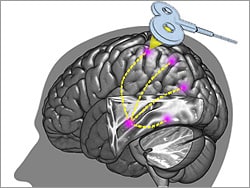
People usually know that transcranial magnetic stimulation influence only the superficial brain area. But the researchers have found that this kind of superficial stimulation can also affect the inner brain such as hippocampus which is involved in memory. Stimulation by using the repeated TMS alter the network connectivity with the center of hippocampus. If you are interested in this article, please check out the following link.
Read more: http://www.medscape.com/viewarticle/830610

Researchers have developed the new technique being able to work as like fMRI. This device is called diffuse optical tomography. This device generates some tiny red lights to a subject’s scalp. Using this technique, the researchers can recover the fMRI-like image which enables to measure changes of blood flows in the human brain.
If you are interested in this article, please click the link.
Link: http://www.scientificamerican.com/article/tiny-lights-could-illuminate-brain-activity/
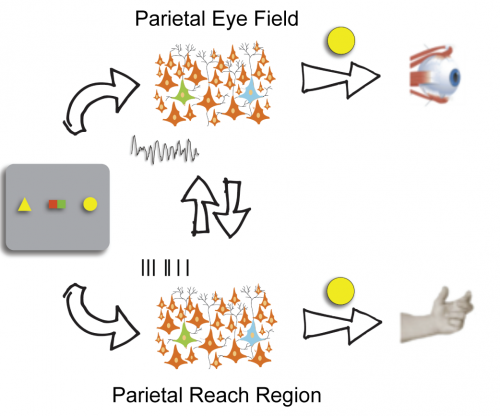
Researchers tried to prove that the hypothesis about relation between parietal reach region and the parietal eye field. With EEG, the processing of arm movements is figured out after receiving visual signal from our eyes.
If you are interested in this news, please click the following link.
Link: http://medicalxpress.com/news/2014-08-brain-interact-cognitive.html
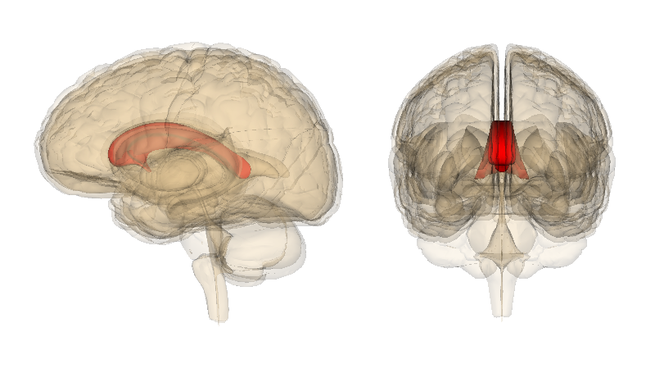
The strange 5 stories of the neuroscience patients were introduced in this news. It can alter the aspects of the brain.
If you interested in this news, please click the following link :-)

Forming and recalling the memory is one of the important ability for human. Some researchers have found the key region of processing the visual and sensory input as well as memory. Through this finding, device stimulating that brain region is developed to help the patient with memory disorder.
Please check out the following link.
Read more: http://www.medicalnewstoday.com/articles/279461.php

The researchers have found that the early life stress influences to the level of achieveness, romantic emotion and so on.
In detail, the children who were suffered from physically abuse and experienced any of these early life stresses have smaller amygdala and hippocampus. This findings suggest an important thing that the size or shape of brain affects how these individuals will become in the future.
If you are interested in this news, Please click the following link of figure: